
When a wet basement is an emergency
A basement is the lowest room in the house, so water arrives from every direction. Causes include a failed sump pump, seepage through walls and floors, a backing-up drain or runoff after heavy rain. Because basements often hold the electrical panel and the water heater, deep water can create an electrical hazard as well as a damage problem.
This page covers the below-grade room in East Haven, CT homes. If your basement water came from a rising coastal or river flood, see flood damage cleanup. If it came from a toilet or floor drain, see sewage backup cleanup.
Safety first
Do not walk into a flooded basement if water is near outlets, the panel or a water heater. Keep children and pets out, and never run a gas generator or pump inside the house.
First steps in a wet basement
Check electrical risk
If water is near the panel, outlets or appliances, stay out and call the utility.
Stop the source
Close the main valve if a pipe or heater is leaking.
Do not pump too fast
Removing all water at once from a flooded basement can stress walls when the ground outside is saturated.
Move belongings upstairs
Lift boxes and furniture off the floor and out of the room.
Photograph
Document the water line and what is affected.
Call (833) 521-1033
Tell us the depth, the source if known, and whether the sump is working.
What the work looks like
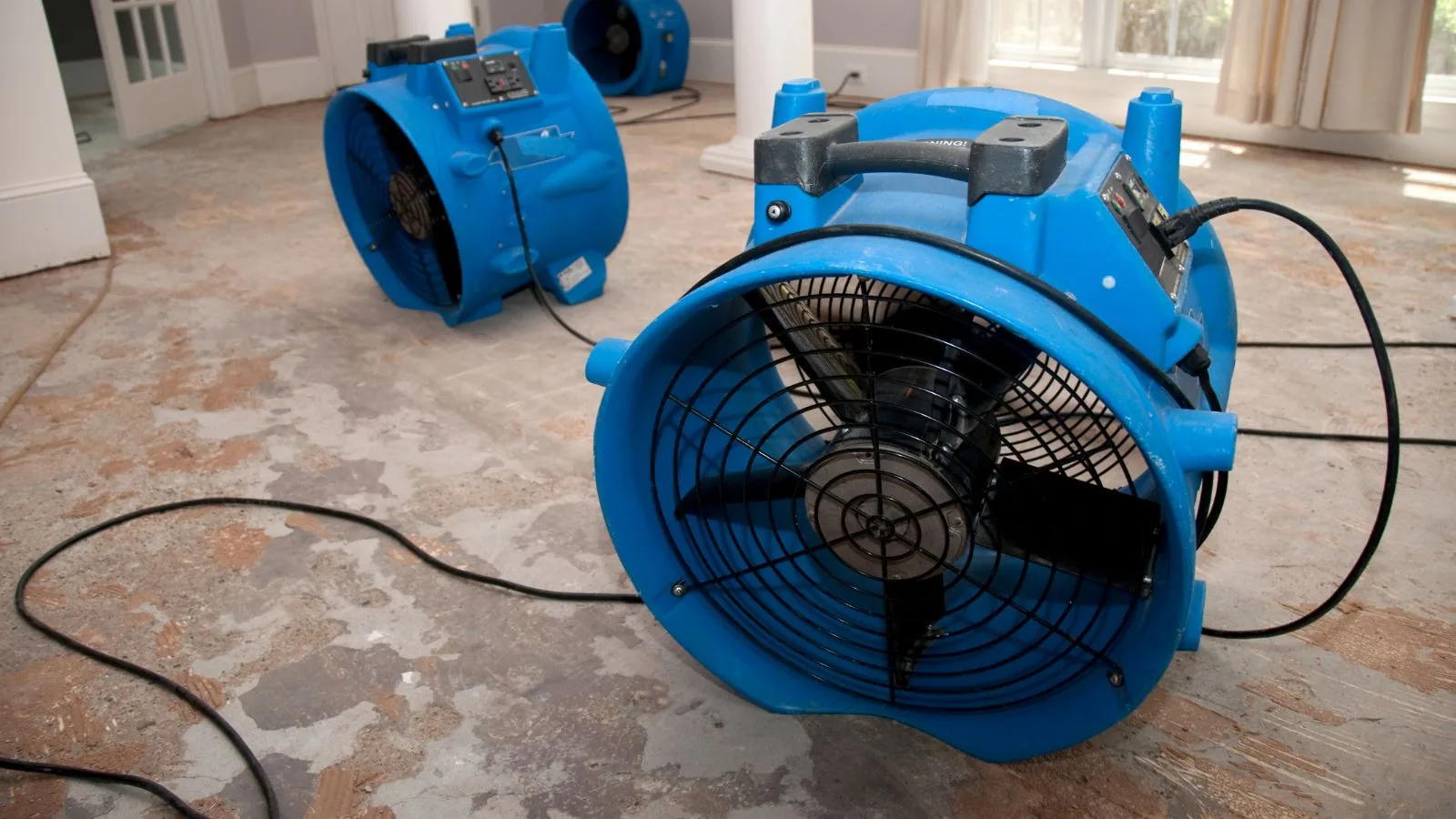
Basement work starts with extraction, using submersible pumps for depth and wet vacuums for the final film. Then moisture mapping identifies wet walls, floors and framing. Wet drywall, insulation and carpet are typically removed, and the concrete and framing are dried with air movers and dehumidifiers.
Dehumidification is especially important in basements, because cool concrete slows evaporation and below-grade humidity stays high. Readings are tracked until the space reaches the dry standard.
Common basement water sources
| Source | Typical clue | Next step |
|---|---|---|
| Sump pump failure | Water around the sump pit, pump silent. | Pump out, dry, call a plumber about the pump. |
| Seepage through walls or slab. | Damp walls, efflorescence after rain. | Dry, then ask a contractor about drainage. |
| Failed water heater or pipe. | Warm water, sudden volume | Close the valve, extract and dry. |
| Drain backup | Odor, dirty water | Treat as sewage, see sewage page. |
| Storm or coastal flooding | Water after a storm or high tide. | Treat as flood water. |
Finished versus unfinished basements
An unfinished basement is mostly concrete and framing, and it dries relatively well once the water is out. A finished basement has carpet, drywall, insulation, trim and sometimes a bathroom, which means a lot more porous material to remove if the water was contaminated or sat for days. Stored contents add another layer, since cardboard and fabrics wick water and grow mold.
In finished spaces, we often cut drywall above the water line and remove wet insulation, then dry the framing. We explain this before cutting, so you can see the plan.
Sump pumps, drainage and what restoration covers
A sump pump removes groundwater from a pit under the slab. If the pump fails or the power goes out, water rises quickly. We restore the damage. A plumber or drainage contractor handles the pump, backup power and perimeter drains, and a waterproofing contractor handles seepage prevention. We say plainly which parts of a basement problem fall outside restoration.
Basement wet? Get it pumped and the moisture mapped.
Call (833) 521-1033Local water exposure, from the record
East Haven has areas with documented coastal and river flooding. The National Weather Service record notes Farm River flooding at the Coe Road, Hemingway Road and Short Beach Road corner in Irene, and repeated high-water flooding on Cosey Beach Avenue. Basements in those areas face exposure that inland basements may not.
We do not claim that your basement is at risk. Check your address on the FEMA flood map or call the Town Engineer at (203) 468-3250. We handle the cleanup. Waterproofing and drainage work is a separate trade, and we say so plainly.
What affects the cost of basement cleanup
Water depth and category
Deeper and dirtier water means more work.
Finished versus unfinished
Finished walls, carpet and contents add removal.
Source
Clean supply water and flood water are handled differently.
Drying time
Concrete and below-grade humidity slow drying.
Prevention
Drainage, sump upgrades and waterproofing are separate.
Reach us on (833) 521-1033 and ask for scope and price in plain terms.
Insurance for basement water
Coverage depends on the source. Sudden pipe or heater failure may be covered, sump pump overflow and sewer backup often need an endorsement, and flood damage is excluded unless you carry flood insurance. Read your policy or ask your insurer, since basement coverage can have special limits.
Questions about basement water damage in East Haven
Do you handle basement flooding at night or on weekends in East Haven?
Yes. The line is staffed every night of the year. Stay out of the room if water is near electrical equipment and call (833) 521-1033.
Do you waterproof basements?
No. We handle cleanup and drying after water damage. Waterproofing is a separate trade.
Should I pump out all the water right away?
Not always. If the ground outside is saturated, removing water too fast can stress walls. We assess the situation before pumping.
How do I prevent mold in a wet basement?
Dry materials quickly and lower humidity. EPA guidance says to dry within 24 to 48 hours.
Is sump pump failure covered by insurance?
Often only with an endorsement. Ask your insurer.
Where we work
Our crews take basement water damage calls in East Haven, New Haven and Woodbridge. If you are in Hamden, Orange and North Haven, describe where you are and we will answer straight.
Further reading on basement water damage: National Weather Service New Haven and Long Island office, Connecticut Department of Public Health, Town of East Haven. Industry practice for water work follows the ANSI/IICRC S500 standard and for mold work the S520 standard.
Basement wet right now? Call the 24/7 line.
Call (833) 521-1033