
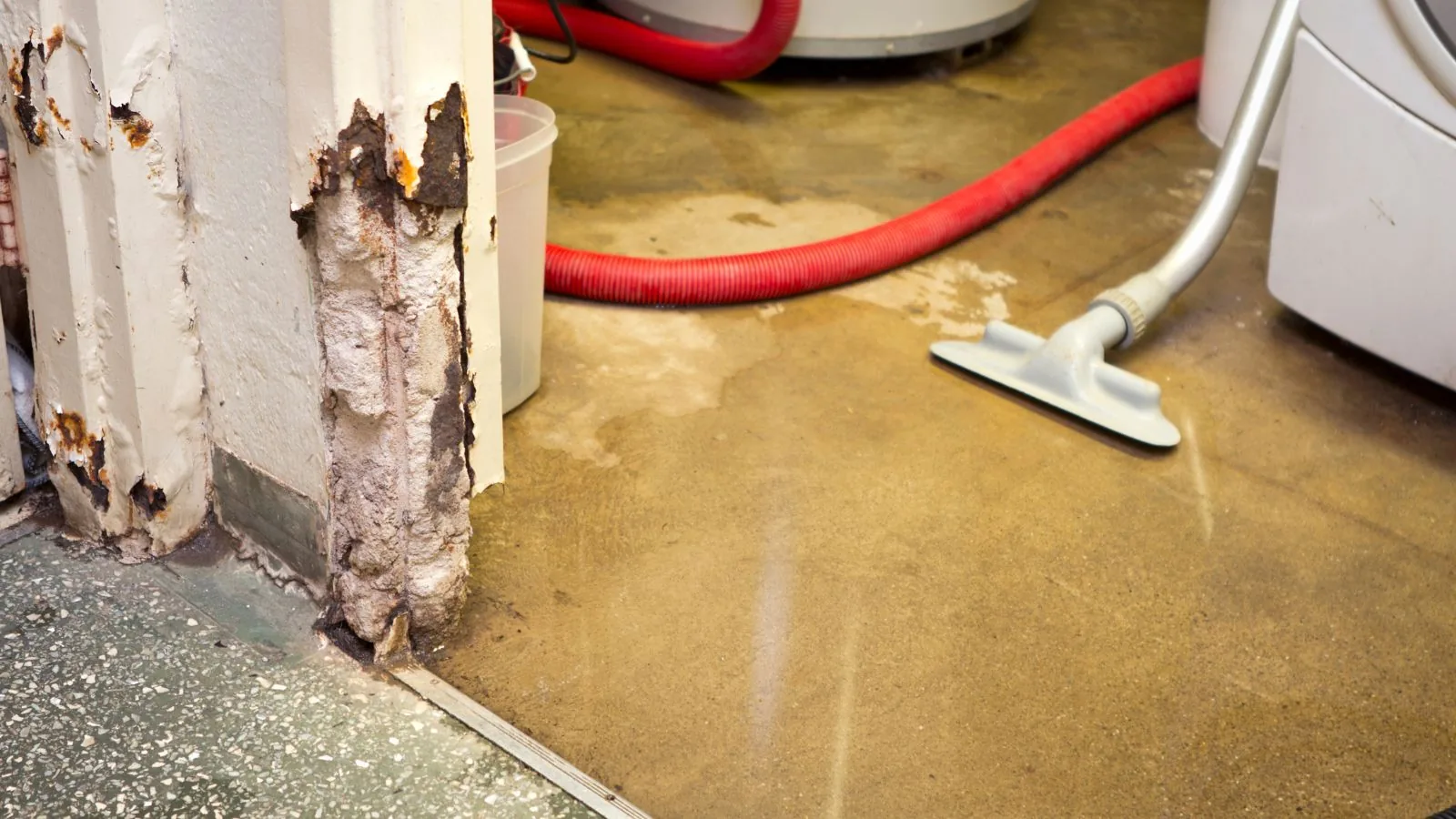
When standing water is an emergency
Water extraction is the first job on almost every wet loss. It means removing bulk liquid water from floors, carpet, low spots and cavities with submersible pumps, truck-mounted or portable extraction units and wet vacuums, before any drying equipment is set. In East Haven, CT, that is the work that keeps a plumbing failure or a coastal flood from turning into a structural problem.
Every hour that water sits, it moves. It wicks up drywall, soaks into the subfloor and runs under baseboards into rooms that looked dry. Our line is staffed 24/7, so a loss at 2 a.m. on a Sunday is handled the same way as one at noon on a Tuesday.
What to do while you wait for the crew
You can limit the damage in the first few minutes, as long as you stay safe.
- Stop the source if you can do it safely. For a supply line, that means the fixture shutoff or the main water valve.
- If water is near outlets, appliances or the electrical panel, stay out and call the utility or 911 first. Never stand in water to touch a breaker.
- Lift furniture legs onto blocks, pull rugs and move valuables, electronics and paper to dry rooms.
- Keep children and pets out of the water. If it came from a toilet, a sewer line or a flood, treat it as contaminated.
- Take photos and short videos of the water level and of what is affected before anything is moved.
- Call (833) 521-1033 and tell us how deep the water is, what room it is in and where it started.
Extraction is not drying
Pulling the water off the floor is only the first half. Materials still hold moisture after the puddles are gone, and that moisture is what grows mold and swells wood. Once extraction is done, the job moves to structural drying and dehumidification, where air movers and dehumidifiers bring wall cavities and subfloors back to a safe moisture level.
We tell you where extraction ends and drying begins when the scope is explained, so you know what each stage covers before work starts.
Which extraction tool fits which situation
The equipment depends on depth, floor type and the water category under ANSI/IICRC S500.
| Situation | Tool used | Why it fits |
|---|---|---|
| Shallow water on hard floors. | Wet vacuums and squeegee tools. | Pulls thin films from tile, vinyl and sealed concrete without spreading water. |
| Soaked carpet and pad | Weighted extraction wand or truck-mounted unit. | Draws water out of the pad as well as the surface fibers. |
| Several inches in a basement or garage. | Submersible pumps with discharge hose. | Moves large volume fast, then wet vacuums finish the last film. |
| Water trapped in cavities | Injection or flood-cut access plus extraction. | Reaches water behind baseboards and under cabinet toe kicks. |
| Contaminated or flood water | Pumps and sealed hoses, PPE for the crew. | Keeps Category 2 and 3 water out of clean areas. |
Describe the water to a dispatcher and get a scope explained before work starts.
Call (833) 521-1033Why extraction calls look different near the shoreline
East Haven sits on Long Island Sound with the Farm River and Quinnipiac River nearby, and the National Weather Service has documented repeated coastal flooding here. Its New Haven area flood impact record notes that on June 5, 2012, about 30 homes in East Haven were surrounded by water, and that on September 18, 2012, heavy rain on top of high water left roughly a foot of water on Ellis Road.
That history matters for extraction because shoreline water is often Category 2 or 3 and carries silt. Extraction crews wear protective gear, and affected porous materials are usually removed rather than saved. If your street has flooded before, the Town Engineer at (203) 468-3250 can tell you how your address sits on the current FEMA flood maps.
What changes the scope of an extraction job
We do not quote a number sight unseen. These are the factors that move it.
Water volume and depth
A film on a kitchen floor and a foot in a garage need different equipment and different hours.
Water category
Clean supply water, gray water and sewage or flood water are handled under different S500 rules.
Floor type and access
Finished basements, stairs and tight crawl spaces take longer than an open slab.
Hours and time of day
Overnight and weekend calls need a crew mobilized outside normal hours.
What must be removed
Soaked pad, insulation and low drywall add removal and disposal to the extraction itself.
Call (833) 521-1033 and ask for the scope in writing.
Insurance and what to document
Sudden and accidental water damage is often covered by a homeowners policy, while gradual leaks and neglect often are not, and flood damage is usually excluded unless you carry separate flood coverage. Read your policy or ask your insurer, since coverage depends on the cause. The Connecticut Insurance Department advises taking photos, keeping receipts and not throwing out damaged property until an adjuster has reviewed it.
We document water depth, moisture readings and affected areas so your insurer has an itemized record to work from.
Questions about water extraction in East Haven
Do you handle water extraction emergencies at night or on weekends in East Haven?
Yes. The dispatch line is answered 24 hours a day, every day of the year, and a crew is sent to active water losses in East Haven and nearby towns. Call (833) 521-1033, say how deep the water is, and stay out of any room where water is near electrical equipment.
How is water extraction different from structural drying?
Extraction removes liquid water. Structural drying removes the moisture left inside materials. Both are needed on most losses, and the drying stage is what prevents swollen wood and mold.
Can I use a shop vacuum myself?
For a small, clean spill on a sealed floor, a wet vacuum can help while you wait. Do not use household vacuums on deep water, near outlets, or on sewage or flood water. Deeper losses need pumps and protective equipment.
Do you pump out a flooded basement?
Yes. Basement losses use submersible pumps and wet vacuums, followed by drying. The basement water damage page covers sump failure, seepage and finished spaces in more detail.
Is flood water handled differently from a pipe leak?
Yes. Flood water is not clean supply water and is treated as contaminated, so porous materials are often removed. See flood damage cleanup for how those jobs are scoped.
Where we work
water extraction calls reach us from East Haven, New Haven and Woodbridge, and we also hear from West Haven, Hamden and Orange. Give the address when you call and we will confirm coverage.
Further reading on water extraction: EPA guidance on mold and moisture, Connecticut Insurance Department, National Weather Service New Haven and Long Island office. Industry practice for water work follows the ANSI/IICRC S500 standard and for mold work the S520 standard.
Water still on the floor right now? The line is open around the clock.
Call (833) 521-1033