
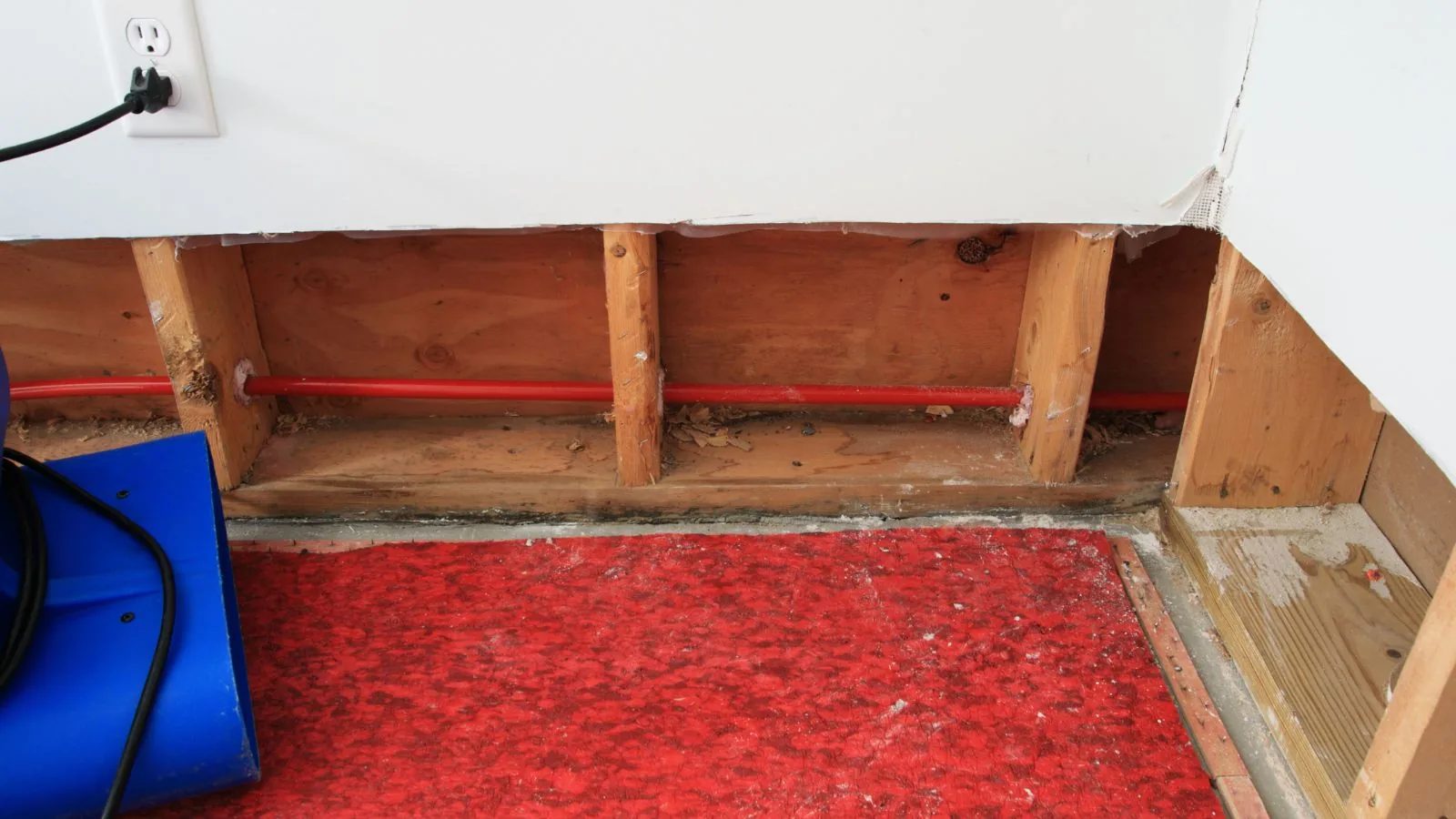
What water does inside a wall
Drywall is gypsum between two layers of paper. When it gets wet, the paper holds water, the gypsum softens and the surface stains, bubbles or sags. Water often enters from above or behind, so the visible stain is the edge of a bigger wet area. Baseboards, trim and insulation in the wall cavity can be wet even when the paint looks fine.
This page covers drywall, baseboards and plaster walls in East Haven, CT. Ceilings are on the ceiling page, and wet kitchen cabinet walls are on the kitchen page.
Signs that a wall is wet
- Yellow-brown stains or rings on the paint.
- Bubbling, peeling or blistered paint.
- Baseboards that swell, lift or darken.
- Soft spots when you press with a finger.
- A musty smell near the wall.
Dry in place or cut it out
Not every wet wall has to be removed. Clean water caught quickly can sometimes be dried through small holes with injection drying and air movers. Drywall that is crumbling, stained by contaminated water or wet for days is usually cut out, along with wet insulation, and the cavity is dried.
A flood cut, which removes drywall a foot or two above the water line, lets crews dry the framing and check for mold. We explain what we plan to cut and why before work begins.
Wall damage, from stain to cut
| Condition | Typical decision | Reason |
|---|---|---|
| Light stain, dry readings | Prime and paint | The water source is gone. |
| Wet readings, intact drywall | Dry in place with equipment. | Clean water caught fast. |
| Soft, crumbling or sagging drywall. | Cut out and replace | Gypsum has lost strength. |
| Wet insulation in cavity | Remove | Holds moisture against framing. |
| Contaminated water | Cut to above the water line. | Cannot be disinfected. |
Plaster, drywall and baseboards
Older East Haven homes may have plaster or lath, while newer ones use drywall. We do not assume which one you have. Plaster tends to be more resistant to water at the surface but can fail in sheets, and drywall softens and crumbles. Baseboards are often finger-jointed wood or MDF, and MDF swells permanently when wet.
The decision on each material comes from readings and inspection, not assumptions, and we show you meter results where we can.
Insulation inside wet walls
Fiberglass batts hold water in their fibers and press against the back of the drywall, and cellulose settles and stays wet. Spray foam is more water-resistant, but it can trap moisture behind it. Wet insulation is typically removed, because it keeps framing damp and encourages mold.
For a fuller picture of how drying equipment handles a wet cavity, see structural drying.
Wall stain growing? Get the moisture measured.
Call (833) 521-1033What to do for a wet wall
Stop the source
Fix the leak or close the valve first.
Pull furniture back
Allow air to reach the base of the wall.
Do not paint over it
Paint traps moisture and hides the real extent.
Check for mold
If you see dark spots, do not scrub or disturb them.
Photograph
Capture stains and any bubbling.
Call (833) 521-1033
We measure behind the surface before deciding.
What affects wall repair cost
Area affected
Larger sections mean more cutting and drying.
Insulation
Wet insulation is usually removed.
Water category
Contaminated water means more removal.
Finish
Texture, paint and trim matching are separate from mitigation.
Access
Cutting and drying behind cabinets takes more time.
Call (833) 521-1033 to get the scope explained before you commit to anything.
Insurance and permits
Sudden water damage to walls is often covered. Gradual seepage often is not. Read your policy or ask your insurer, and photograph before cutting. East Haven's permit guidance lists painting as work that does not need a permit, and lists plumbing and electrical work as work that does. Call the Building Department at 203-468-3216 for details.
Questions about wall and drywall water damage in East Haven
Do you handle wall water damage after hours in East Haven?
Yes. The line is open 24/7, but slow wall leaks are less urgent than active water. Call (833) 521-1033 and describe what you see.
Can a stained wall just be painted?
Only after it is dry and the source is fixed. Painting over a wet wall hides damage and can trap moisture.
Will you cut my drywall?
Only if readings or conditions require it. We explain what we plan to remove and why.
How do you dry inside a wall?
With injection drying or by removing a section, plus air movers and dehumidifiers.
Can mold be inside a wet wall?
Yes, if materials stay damp. See the mold remediation page.
Where we work
We handle wall and drywall water damage in East Haven, New Haven and Woodbridge, and we hear from Orange, North Haven and Wallingford too. Tell us the street and we will confirm.
Further reading on wall and drywall water damage: Connecticut Department of Public Health, Town of East Haven, EPA guidance on mold and moisture. Industry practice for water work follows the ANSI/IICRC S500 standard and for mold work the S520 standard.
Wall stained or soft? Call to check what is behind it.
Call (833) 521-1033