
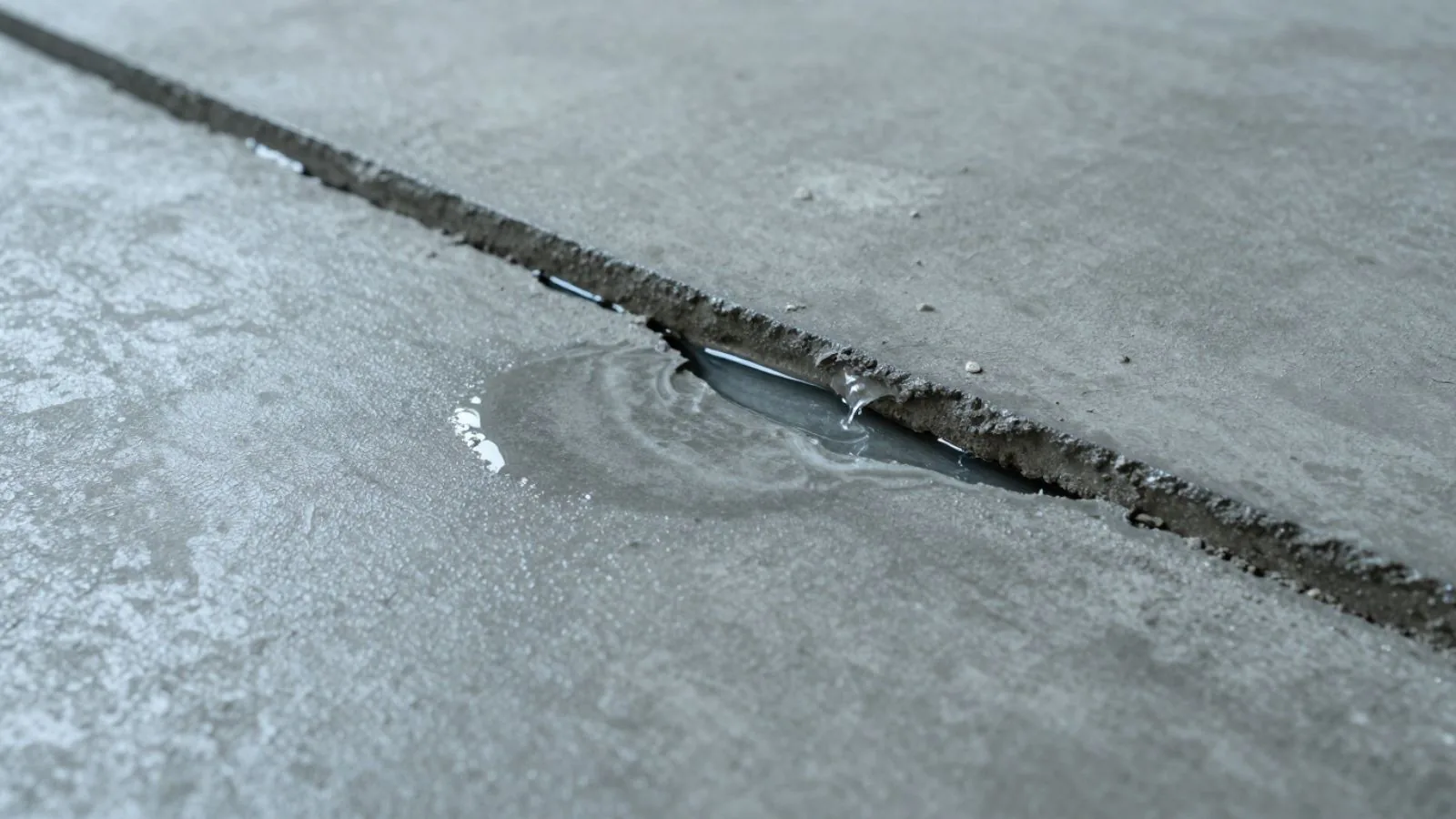
What a slab leak is, in plain words
A slab leak is a leak in a water or drain line that runs under or inside a concrete foundation slab. Water that cannot escape downward rises through cracks and joints, or it soaks into flooring and the base of walls. The signs are usually wet spots, warm patches on the floor, the sound of running water and a bill that climbs.
In East Haven, CT, not every home has a slab. Many houses have basements or crawl spaces, and the right page for those is the basement page or the crawl space page. This page is for homes with slab-on-grade rooms, additions or garages.
Safety first
A hot spot on the floor can mean a leaking hot water line, so avoid standing barefoot on it. Close the main valve, and keep power off to wet areas until a plumber and an electrician have checked.
If you suspect a slab leak
Close the main valve
If the leak is a pressurized line, closing the main stops the flow.
Check the meter
If the meter still turns with everything off, the leak is on your side of it.
Call a plumber
Locating a slab leak takes specialized detection equipment.
Protect flooring
Lift rugs, pull furniture and soak up surface water.
Photograph
Capture wet areas, warm spots and baseboards.
Call the 24/7 line
Describe the floor type and any musty smell.
The cleanup side of a slab leak
A slab leak keeps wetting flooring, subfloor and the base of walls until it is found and fixed. The restoration side is extraction, moisture mapping and drying once the plumber has stopped the flow. Wood and laminate flooring are often cupped by the time the leak is found, and carpet pad holds water for a long time.
We map the affected area with meters and thermal imaging, lift what has to come up and set air movers and dehumidifiers. Because the slab itself holds water, readings are monitored until the area is dry.
Slab leak clues and next steps
| Clue | Possible meaning | Next step |
|---|---|---|
| Warm spot on the floor. | Hot water line leak under the slab. | Plumber with leak detection. |
| Sound of running water, fixtures off. | Pressurized line leaking | Close the main, call a plumber. |
| Damp carpet or baseboard | Water rising through the slab. | Moisture map and extraction. |
| Cracks with moisture | Water pushing through joints | Plumber and drying. |
How a plumber finds a slab leak
Plumbers use several methods to locate a leak in a pressurized line without breaking the whole slab. Acoustic listening devices pick up the sound of escaping water. Thermal imaging and pipe locating tools trace hot lines, and a pressure test isolates which line is losing pressure. Once the location is known, the plumber chooses between breaking the slab at the leak, rerouting the line through walls or attic, or relining the pipe.
We stay out of those decisions and focus on the water. Coordinating with the plumber matters, because floors may need to come up for access, and drying should account for any concrete cutting.
Flooring over a slab
Floors over concrete are vulnerable because water moves sideways under them. Vinyl planks, laminate and engineered wood can trap moisture between the flooring and the slab, and tile adhesive can fail. We check flooring with meters and lift sections to see what is underneath, and then dry with mats, air movers and dehumidifiers.
If the leak came through a slab in a finished basement or addition, the basement page has more on below-grade materials.
Floor warm or damp with no obvious cause? Call and describe it.
Call (833) 521-1033What affects cost
How long it ran
Longer leaks soak more flooring and wall base.
Flooring
Hardwood, laminate and tile need different drying methods.
Slab drying time
Concrete holds moisture and dries slowly.
Repair method
Pipe repair or rerouting is a plumber's cost, not part of restoration.
Rebuild
Flooring, baseboards and paint are separate.
Call (833) 521-1033 for a plain explanation of scope and price.
Insurance for slab leaks
Coverage for slab leaks varies. Some policies cover the water damage that results from a sudden leak but not the cost of finding or repairing the pipe under the slab. Read your policy or ask your insurer, and ask the plumber for a written report of the cause.
Questions about slab leak water damage in East Haven
Do you handle slab leak emergencies at night or on weekends in East Haven?
Yes, there is no after-hours gap. Close the main water valve and call (833) 521-1033 so extraction and drying can begin while a plumber locates the leak.
Do you find and fix the slab leak?
No. A plumber locates and repairs it. We handle the water damage cleanup and drying.
How do I know whether my house has a slab?
Look for a basement or crawl space. Slab-on-grade rooms, additions and garages have no space beneath. Property records or a contractor can confirm.
Can the slab itself be dried?
Concrete holds moisture and dries slowly. Readings guide when flooring above can be reinstalled.
Will flooring need replacing?
Often for wood and laminate, which cup when wet. Tile may survive, but the subfloor and adhesive are checked.
Where we work
We handle slab leak water damage in East Haven, New Haven and Woodbridge, and we hear from West Haven, Hamden and Orange too. Tell us the street and we will confirm.
Further reading on slab leak water damage: Connecticut Department of Public Health, Town of East Haven, EPA guidance on mold and moisture. Industry practice for water work follows the ANSI/IICRC S500 standard and for mold work the S520 standard.
Water coming up through the floor? Call now.
Call (833) 521-1033