
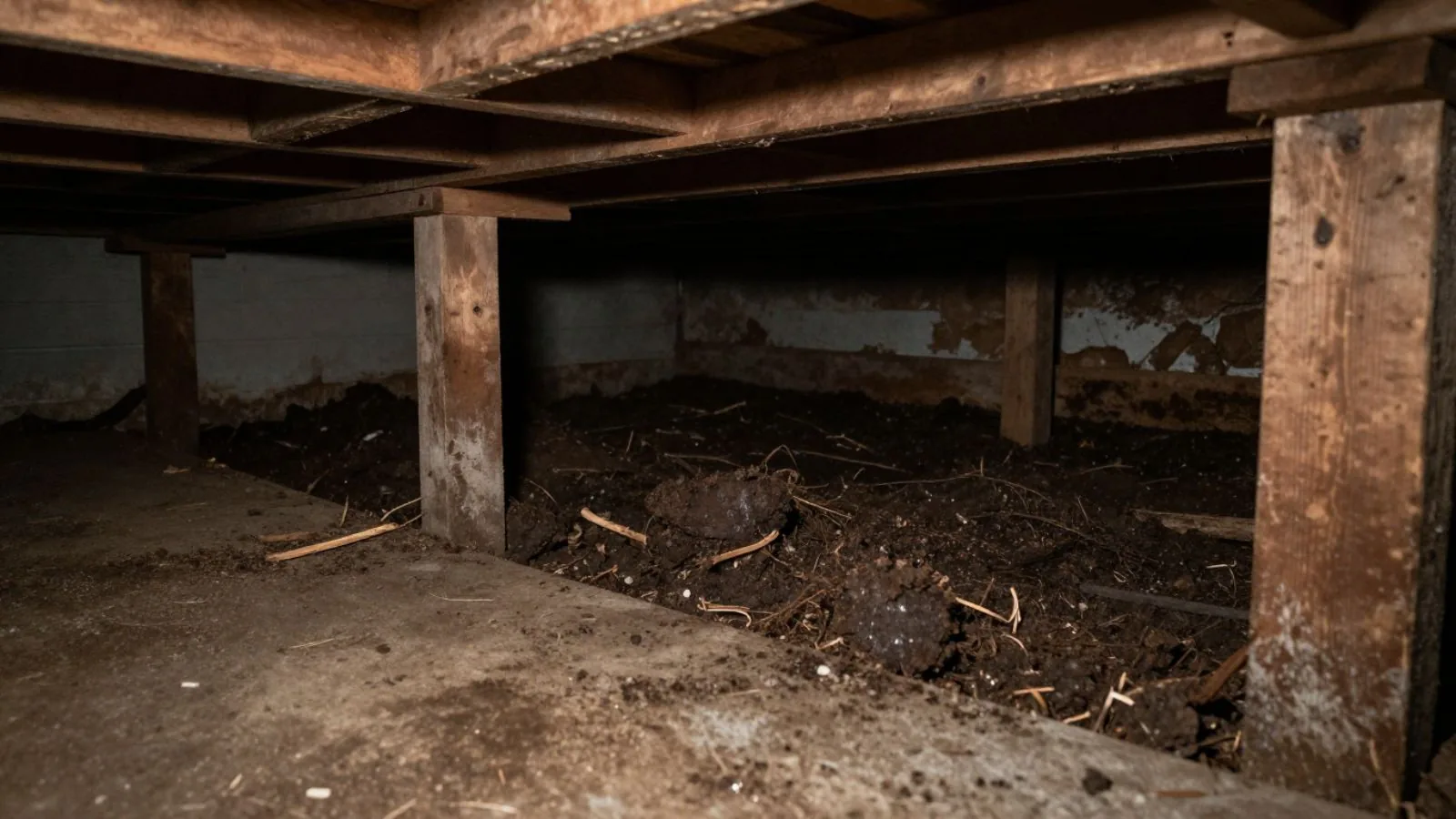
What water does in a crawl space
A crawl space is a shallow void under the first floor. When water gets in from a leak, groundwater or a coastal storm, it soaks insulation, vapor barriers and the underside of the floor. Because the space is dark and poorly ventilated, moisture can linger for weeks and feed mold on joists and subfloor.
Not every East Haven home has a crawl space, and we do not claim how common they are. If your house has one, a wet crawl space deserves attention even if the rooms above look fine.
Signs your crawl space is wet
The usual clues show up in the living space. Floors can feel cold, soft or bouncy, and a musty smell can rise through vents. Inside the crawl space, look for standing water, sagging insulation, rust on ducts and a vapor barrier that is torn or pooled with water.
Do not enter a crawl space if water is deep, if there are electrical lines near water or if you smell gas. Take photos from the access hatch, and call us.
Common sources of crawl space water
- A leaking supply or drain line under the floor.
- A failed water heater or appliance above that drained down.
- Coastal storm tide or heavy rain that raised water near the house.
- Roof or gutter water draining toward the foundation.
- Condensation from cold ducts and pipes.
What the work involves
Crawl space work starts with extraction using small pumps and wet vacuums, then moisture mapping of joists and subfloor. Wet fibrous insulation is typically removed, because it holds water against the wood. Air movers and dehumidifiers dry the space, and readings are tracked until the wood reaches target moisture.
If mold is found, the work follows S520 practice, and the mold remediation page explains containment and removal. We do not waterproof or encapsulate, which are separate construction trades.
Crawl space damage by cause
| Cause | Water type | What it needs |
|---|---|---|
| Supply line leak | Category 1 at first | Extraction, drying, line repair by a plumber. |
| Drain or sewage leak | Category 3 | Protective gear, removal and cleaning, see sewage cleanup. |
| Storm tide or groundwater | Category 2 or 3 | Extraction, insulation removal, drying. |
| Condensation | Category 1 | Drying and moisture source correction. |
Vapor barriers, insulation and joists
A typical crawl space has a ground cover or vapor barrier, insulation between the joists and wood framing overhead. Water affects each differently. A torn barrier lets ground moisture rise, wet fiberglass insulation sags and holds water against the subfloor, and joists stay damp longer than they look because dark, unventilated air dries them slowly.
Removing saturated insulation is usually the right call. Solid joists dry with equipment and monitoring, and we record readings so you can see when they reach target. We do not install barriers or insulation, since those are separate construction trades.
Safety rules for crawl spaces
Crawl spaces are tight, dark and hazardous when wet.
- Do not enter if standing water is deep or electrical lines or outlets are near water.
- Do not enter if you smell gas or sewage.
- Wear protective gear if you must look, and never go alone.
- Take photos from the hatch with a flashlight.
- Leave the work to a crew with the right gear.
Concerned about moisture under your floor? Call for an assessment.
Call (833) 521-1033What affects cost
Access
Low clearance slows work and equipment placement.
Insulation and barrier
Wet insulation and torn barriers must be removed.
Water category
Contaminated water needs protective gear and disposal.
Drying days
Wood in contact with soil dries slowly.
Prevention work
Encapsulation and drainage are separate from restoration.
We lay out the scope and the price first. Call (833) 521-1033 to begin.
Insurance for crawl space water damage
Sudden leaks that wet a crawl space may be covered, while groundwater and flood water usually are not unless you carry flood coverage. Read your policy or ask your insurer. The FEMA flood map for your address can show whether flood exposure applies, and the Town Engineer at (203) 468-3250 can help with questions.
Questions about crawl space water damage in East Haven
Do you handle crawl space water emergencies at night or on weekends in East Haven?
Yes. The line does not close. Do not enter a flooded crawl space with live electrical lines, and call (833) 521-1033.
Do you encapsulate crawl spaces?
No. We restore after water damage. Encapsulation and drainage systems are separate construction work.
Is mold common after a wet crawl space?
It can develop if materials stay damp. Drying promptly and removing wet insulation lowers the risk.
Is crawl space water always contaminated?
No. A supply line leak is clean at first, but groundwater, storm water and sewage are not.
Can wet joists be saved?
Often yes. Solid wood joists dry with equipment and are monitored, unless they are structurally damaged.
Where we work
Most crawl space water damage requests come from East Haven, New Haven and Woodbridge. A smaller number come from Hamden, Orange and North Haven, and we check each address before promising anything.
Further reading on crawl space water damage: Town of East Haven, EPA guidance on mold and moisture, Connecticut Insurance Department. Industry practice for water work follows the ANSI/IICRC S500 standard and for mold work the S520 standard.
Crawl space wet or smelling musty? Call to get it assessed.
Call (833) 521-1033