
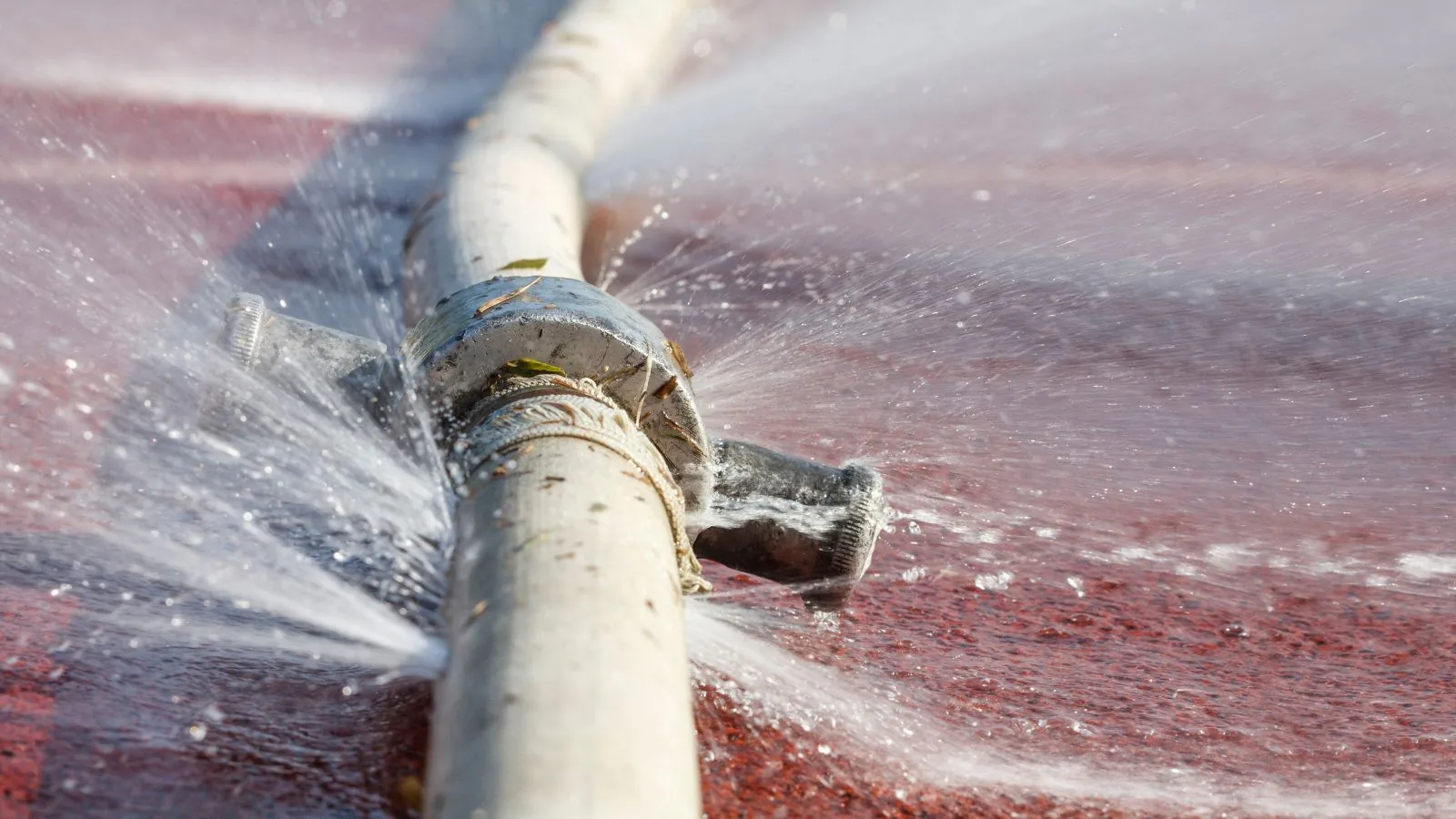
Burst pipe: what to do first
A burst pipe is a pressurized supply line that has split, and it keeps pushing water until someone closes a valve. Residential supply lines commonly run at household pressure all day, so even a pinhole can release a surprising volume into a wall cavity. This page covers the water damage left behind in East Haven, CT homes, from the first shutoff through extraction and drying.
Your first job is the main valve. Find where the water line enters the house, usually near the meter or in the basement, and turn it fully off. If you cannot find it, the Regional Water Authority lists a 24/7 emergency line at 203-562-4020 for problems on the utility side of the meter.
The first ten minutes
Do these in order, and skip any step that puts you at risk.
Close the main valve
Turn it clockwise until it stops, then open the lowest faucet to drain the lines.
Treat the room as electrical
Do not touch outlets or the panel while standing in water. Call the utility or 911 for sparking, buzzing or a burning smell.
Save what is dry
Move electronics, documents and rugs to a dry room before the water spreads.
Photograph the source
Capture the split pipe, the wet surfaces and the water line on the walls before cleanup.
Call the 24/7 line
Tell the dispatcher which floor is wet and whether the ceiling below is dripping.
Do not run heat or fans yet
Pointing a household fan at an unmapped wet wall can push moisture into cavities.
Where burst pipe water actually goes
The visible puddle is rarely the whole loss. Water from a split line follows framing, drops through floor penetrations and soaks insulation, and it often shows up one room or one floor away from the pipe. A ceiling stain below a bathroom, bubbling paint on a wall or a soft spot in the subfloor are all signs the water traveled.
That is why the work starts with a moisture map. Meters and thermal imaging show which walls and floors are wet, so drying equipment goes where the water is and not just where it is visible. If the failed pipe was inside a kitchen cabinet or under a sink, the kitchen water damage page covers cabinets and toe kicks, and a split in a basement ceiling often ends up on the wall and drywall page.
Signs a burst pipe has damaged more than you can see
- Water stains or bubbling paint on a wall that was dry last week.
- A sudden drop in water pressure at several fixtures.
- The sound of running water when everything is off.
- Warped baseboards, soft drywall or a musty smell after the leak is stopped.
- A water meter that keeps moving with all fixtures closed.
How burst pipe damage is sorted for cleanup
Water category depends on the source and on how long it sat.
| Condition | Typical category | What it means for the work |
|---|---|---|
| Fresh split in a clean supply line. | Category 1 | Extraction and drying, most structure can be saved. |
| Same water after sitting in insulation or carpet pad. | Category 2 | Porous materials often removed, area cleaned and treated. |
| Pipe failure with long standing water. | Category 2 or 3 | Wider removal, closer moisture monitoring and documentation. |
Pipe stopped but walls are wet? Get the hidden moisture mapped.
Call (833) 521-1033What affects the cost of burst pipe cleanup
Rooms and floors affected
Water that dropped through a ceiling doubles the area to dry.
Time before shutoff
Longer runs soak more insulation and framing.
Materials hit
Hardwood, carpet pad, plaster and insulation each need their own method.
Drying days
Equipment stays until readings reach target, so thicker materials add days.
Rebuild scope
Pipe repair, drywall and paint are separate from mitigation.
Call (833) 521-1033 to talk through what your loss would involve.
Insurance and the pipe repair itself
Many homeowners policies cover sudden and accidental bursts and the resulting water damage, though the damaged pipe itself and gradual leaks are often treated differently. Check your policy or ask your insurer, and keep the failed pipe section if you can.
The plumbing repair is done by a licensed plumber. East Haven's permit guidance lists installation of plumbing supply, drain, waste or vent lines as work that needs a permit, so ask the Building Department at 203-468-3216 whether your repair does.
Questions about burst pipe water damage in East Haven
Do you handle burst pipe emergencies at night or on weekends in East Haven?
Yes, a person answers at any hour. Close the main water valve, stay out of any water near electrical equipment, and call (833) 521-1033 so a crew can be sent to extract and begin drying.
Do you fix the broken pipe?
Our work is water damage restoration, meaning extraction, drying and cleanup. The pipe itself is repaired by a licensed plumber, and we can tell you what the plumber needs to access.
How long does it take to dry after a burst pipe?
It depends on the materials and how far the water traveled. Drying continues until moisture readings reach target levels, which we check and record, rather than a fixed number of days.
The water was clean, so is mold still a risk?
Wet materials left damp can support mold even when the source was clean. EPA guidance says to dry materials within 24 to 48 hours, which is why fast extraction and structural drying matter.
Should I wait for the insurance adjuster before cleanup?
No. Stop the water and protect the property first. Photograph everything, keep receipts for emergency steps and ask your insurer what they need to see before items are discarded.
Where we work
We take burst pipe water damage jobs in East Haven, New Haven and Woodbridge. Callers from Hamden, Orange and North Haven ask us too, and the answer depends on the street.
Further reading on burst pipe water damage: Connecticut Insurance Department, National Weather Service New Haven and Long Island office, Connecticut Department of Public Health. Industry practice for water work follows the ANSI/IICRC S500 standard and for mold work the S520 standard.
Pipe burst and water still moving? Call now, any hour.
Call (833) 521-1033