
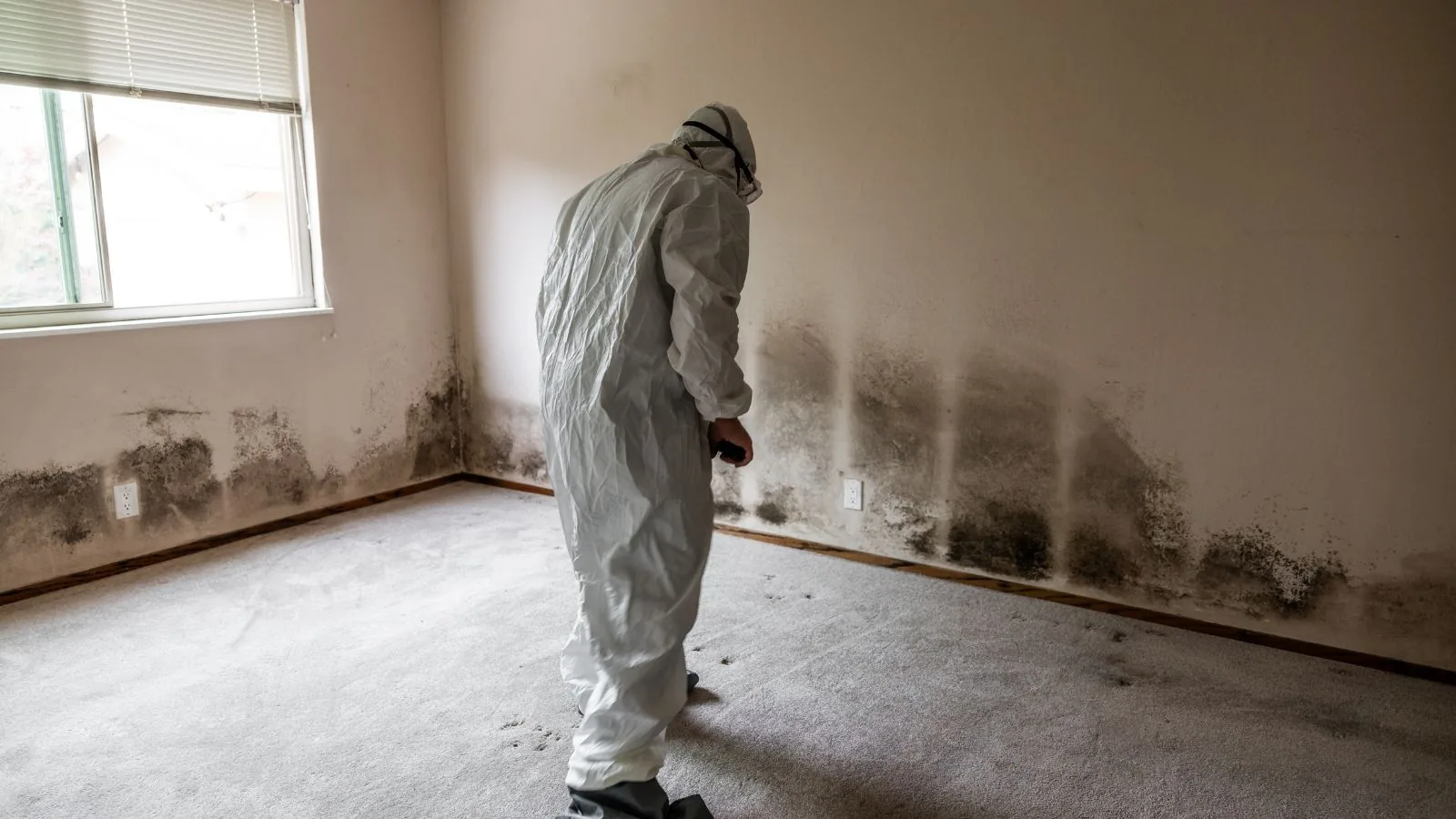
Why basements grow mold
A basement sits against cool soil, holds humidity and often has little airflow. Concrete and block walls wick groundwater, and stored cardboard, fabric and wood give mold plenty to eat. Even a basement that never floods can stay damp enough to grow mold on walls, joists and stored items.
Because of that, scrubbing a patch of mold away without changing the conditions only buys a little time. The mold comes back where the moisture comes from.
A sensible order of work
- Find the moisture source: a leak, condensation on cold pipes, groundwater seepage, a dryer vent or a failed sump pump.
- Fix or reduce the source, then dry the space with ventilation and a dehumidifier.
- Remove porous materials that stayed wet and cannot be cleaned, such as carpet, insulation and soaked drywall.
- Clean hard surfaces such as concrete, block and framing with detergent and water, following the EPA guidance on small areas.
- Dry again, then check readings and the smell after a few days.
- Keep humidity low afterward and watch for new staining.
What you can do yourself
The EPA says small areas of mold on hard surfaces can usually be cleaned with detergent and water, with a mask, gloves and eye protection. Keep the work contained, avoid dry brushing and bag the waste. If the growth covers a large area, sits on drywall or insulation, or returns after cleaning, that is the point to call for help.
Be careful with bleach. It does not penetrate porous materials, and mixing it with other cleaners is dangerous. Health concerns belong to your doctor.
Protecting yourself while you work
If you clean a small area yourself, wear an N95 respirator, gloves and eye protection, and keep other people and pets out of the space. Open a window if you can and run a fan that exhausts outdoors. Avoid dry sweeping or brushing, which throws spores into the air.
Place cleaned material and debris in sealed plastic bags before you carry them through the house. Wash your clothes after the job and shower. If you have any health concern, ask your doctor before doing the work.
What to do with stored belongings
- Move items out of the damp area before cleaning starts.
- Throw away porous items such as damp cardboard, paper and fabric that show growth.
- Wipe hard items such as plastic and metal with detergent and water and let them dry fully.
- Keep sentimental items separate and ask a professional about cleaning options.
- Store dry items in sealed plastic bins and keep them off the floor.
Signs that the fix worked
After cleaning and drying, the musty smell should fade and the surfaces should stay dry and clean. Check the area after a week and again after the next heavy rain. Humidity readings should stay in a normal range.
If staining or smell returns, the moisture source has not been solved. That is the moment to bring in someone with a moisture meter instead of cleaning again.
Do it yourself or call a professional
| Situation | Reasonable approach |
|---|---|
| A small patch on concrete or sealed wood. | Clean with detergent and water, dry the area and fix the source. |
| Mold on drywall, insulation or carpet. | Remove and replace the material, ideally with help. |
| Visible growth across a large area. | Call a professional for assessment and containment. |
| Standing water or a recent flood. | Extract and dry first, then assess for growth. |
| Sewage or contaminated water | Call a professional, since the material is a hazard. |
| Mold keeps returning | Find the hidden moisture source before cleaning again. |
Keeping the basement dry
Long-term control is usually about drainage and humidity. Gutters should empty away from the foundation, the soil near the house should slope away, and the sump pump should run when tested. A dehumidifier set to hold humidity below about 50 percent helps, and storing items off the floor in plastic bins reduces what mold can feed on.
If water is entering through floors or walls, see our page on basement water damage restoration. For growth that needs removal, our mold remediation page explains the process.
Basements near the shore and the Farm River
Many East Haven homes sit close to Long Island Sound, the Farm River and the Quinnipiac estuary, where groundwater can be high and storm surge has reached streets. The National Weather Service has recorded flooding on Cosey Beach Avenue in December 2010, August 2011 and October 2018, and a basement in that kind of setting may take on water or stay damp after the tide recedes.
If you were affected by flooding, the Connecticut Department of Public Health points homeowners to guidance on cleaning flooded homes and re-entering a moldy home. Sources: the National Weather Service New Haven impacts record and the Connecticut Department of Public Health.
Further reading on getting rid of basement mold: EPA guidance on mold and moisture, Connecticut Insurance Department, National Weather Service New Haven and Long Island office. Industry practice for water work follows the ANSI/IICRC S500 standard and for mold work the S520 standard.
Questions homeowners ask
Is basement mold common in East Haven?
Damp basements are common in coastal Connecticut, especially in low-lying areas, though every house is different. If you smell mustiness or see staining, take it seriously and find the moisture source.
Can a dehumidifier get rid of mold?
It lowers humidity and slows growth, but it does not remove mold that is already there. Use it with cleaning or removal and with a fix for the source.
Should I paint over basement mold?
No. Painting hides the problem and traps moisture. Clean or remove the growth and dry the area first.
Is mold testing necessary?
Not always. If you can see or smell mold, the more useful question is where the moisture comes from.
Do you serve nearby towns?
Yes, including New Haven and Woodbridge.
Basement damp, musty or visibly moldy? Call the 24/7 line.
Call (833) 521-1033