
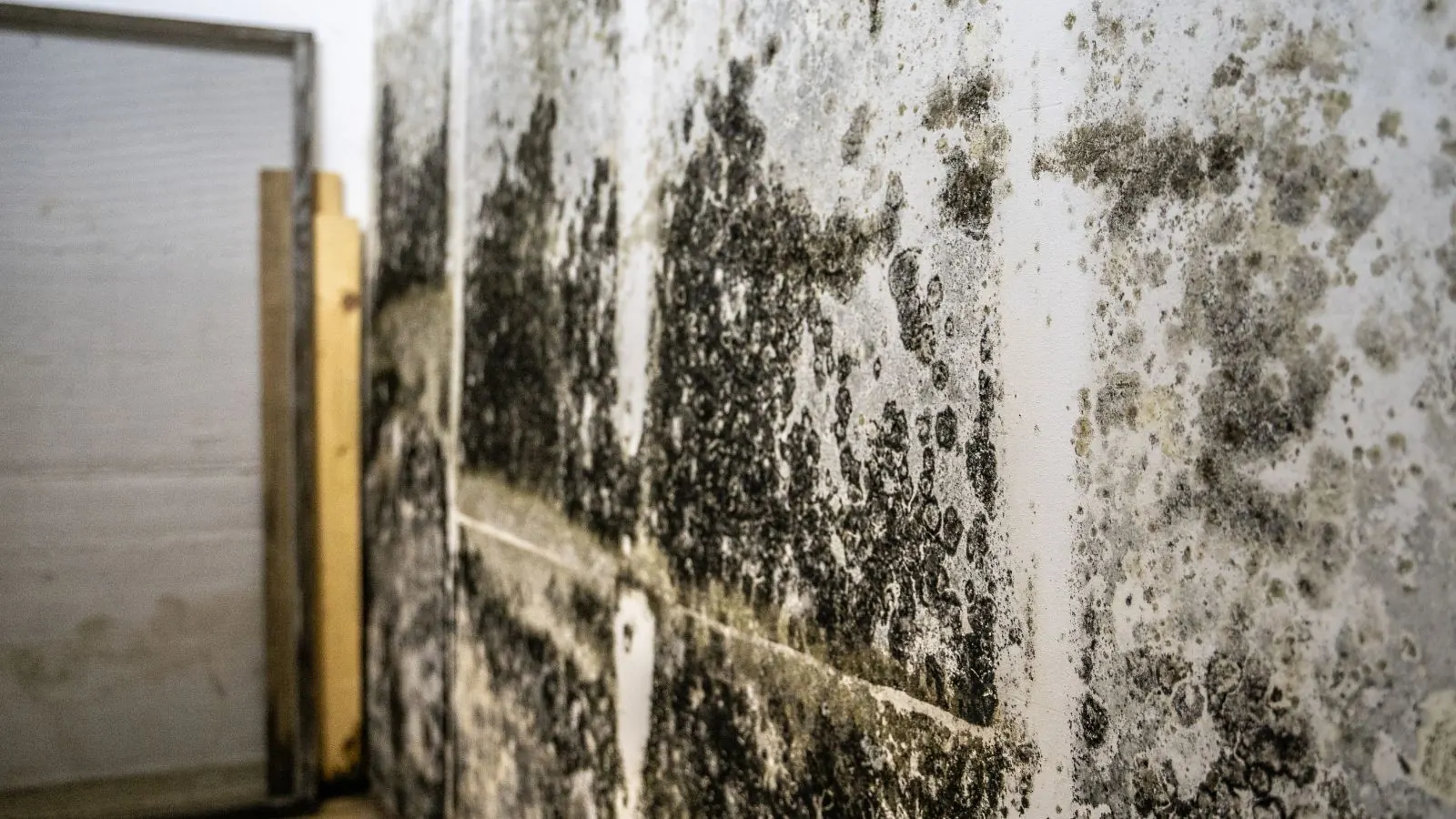
What mold needs
Mold spores are part of ordinary indoor and outdoor air. They grow when they land on a damp organic material and have enough time. Drywall paper, wood, carpet pad, insulation backing and dust are all food. The only part of that you can control is moisture.
The EPA says wet materials should be dried within 24 to 48 hours to prevent mold growth. That is a reason to treat a wet house as an urgent job, even when the water was clean.
How the timeline usually looks
These are general patterns, and conditions vary.
| Time after water | What is typically happening | What to do |
|---|---|---|
| First day | Water is soaking into materials, mold has not started. | Stop the source and extract. |
| One to two days | Window to dry materials before mold becomes likely. | Dry with equipment and monitor. |
| Several days | Musty smell, early growth can appear in damp, dark places. | Open and inspect cavities. |
| A week or more | Visible growth on drywall, baseboards and carpet pad. | Remediation under S520 practice. |
Where mold shows up after a leak
- On the back of baseboards and low drywall.
- Under carpet and pad.
- On the underside of cabinets and countertops after sink leaks.
- On attic insulation and framing after roof leaks.
- Inside HVAC closets and near condensate pans.
Hidden mold behind walls and under floors
The mold you can see is often the smaller part of the problem. Growth can sit inside a wall cavity, under flooring or above a ceiling, where it is fed by water that never fully dried. A musty smell with no visible source is a common clue, and so are stains that return after painting.
A moisture meter and a thermal camera can show wet areas without cutting. In some cases a small inspection opening is the only way to confirm what is happening, and it is far better than tearing out a whole wall on a guess.
Questions people ask about mold and insurance
Coverage for mold varies widely. Some policies cover it when it results from a covered water loss, usually up to a stated limit. Others exclude it or cover it only in limited cases. Mold that develops from long-term leaks or humidity is often excluded as a maintenance issue.
Read the fungi or mold section of your policy before you need it, and ask your agent how it applies to a basement, attic or wall cavity. Quick drying after a covered loss is the best way to avoid the question in the first place.
Why moisture control comes before cleaning
The most important fact about mold is that cleaning alone does not fix it. If the material stays damp, growth returns, sometimes within days. That is why a sound plan starts with finding and fixing the moisture source, then drying the structure, then removing damaged material and finally cleaning and checking.
Industry practice for mold work is described in the ANSI and IICRC S520 standard. We follow its general approach, and we do not claim certification we have not shown you.
The usual sequence for a water-related mold problem
| Step | Purpose | Notes |
|---|---|---|
| Find and stop the source. | Remove the water that feeds growth. | Without this, nothing else lasts. |
| Contain the area | Keep spores from spreading to clean rooms. | Plastic barriers and controlled airflow. |
| Remove wet porous materials | Take out what cannot be cleaned. | Drywall, insulation and carpet pad are common. |
| Dry the structure | Bring materials back to normal readings. | Verify with a meter, not by feel. |
| Clean and check | Remove residue and confirm results. | Visual check and moisture readings. |
Each step builds on the one before it. Skipping the drying step is the most common reason mold returns.
What to do, and what not to do
Stop the source, dry what you can, and keep the area closed so spores do not spread through the house. Take photos. If growth is small and on a hard surface, the EPA says detergent and water cleaning can be enough, but larger or hidden growth calls for professional help.
Do not bleach porous materials and expect the problem to go away. Bleach does not reach the roots in drywall or wood, and disturbing growth can release spores. Health questions belong to your physician, and we do not diagnose or make health claims.
When to call
Call if you smell mold and cannot find it, if growth covers more than a small patch, if the water was contaminated or if materials have been wet for more than a day or two. We assess moisture and visible growth and explain what comes out and what moisture work follows, as described on the mold remediation page.
If water is still present, the first priority is extraction and drying, since mold removal without drying is temporary.
Connecticut guidance after flooding
The Connecticut Department of Public Health publishes guidance for homeowners after flooding, which links to material on cleaning flooded homes, inspecting for water damage and re-entering a moldy home, as well as FEMA and EPA resources. It also advises treating flooded private wells as contaminated until disinfected and tested.
For East Haven homeowners on public water this is less relevant, since the Regional Water Authority supplies the town, but anyone with a private well should read it. The state's licensing rules for mold work are not something we state here. Ask whether your state licenses mold work before hiring. Source: Connecticut Department of Public Health.
Further reading on mold from water damage: Town of East Haven, EPA guidance on mold and moisture, Connecticut Insurance Department. Industry practice for water work follows the ANSI/IICRC S500 standard and for mold work the S520 standard.
Questions homeowners ask
How fast can mold grow after a leak in East Haven?
It depends on conditions, but the EPA advises drying wet materials within 24 to 48 hours to prevent growth. Warm, damp, closed spaces such as wall cavities are where it starts first.
Can I kill mold with bleach?
Not reliably on porous materials. Bleach does not penetrate drywall or wood, and scrubbing can spread spores.
Do I need mold testing?
Not always. Testing can identify what is present, but the decision usually depends on moisture and visible growth. Ask for an assessment.
Will mold come back?
It can if moisture returns. Fixing and drying the source is part of the plan.
Do you serve homes outside East Haven?
Yes, including New Haven and Woodbridge.
Seeing or smelling mold after water damage? Call to talk it through.
Call (833) 521-1033