
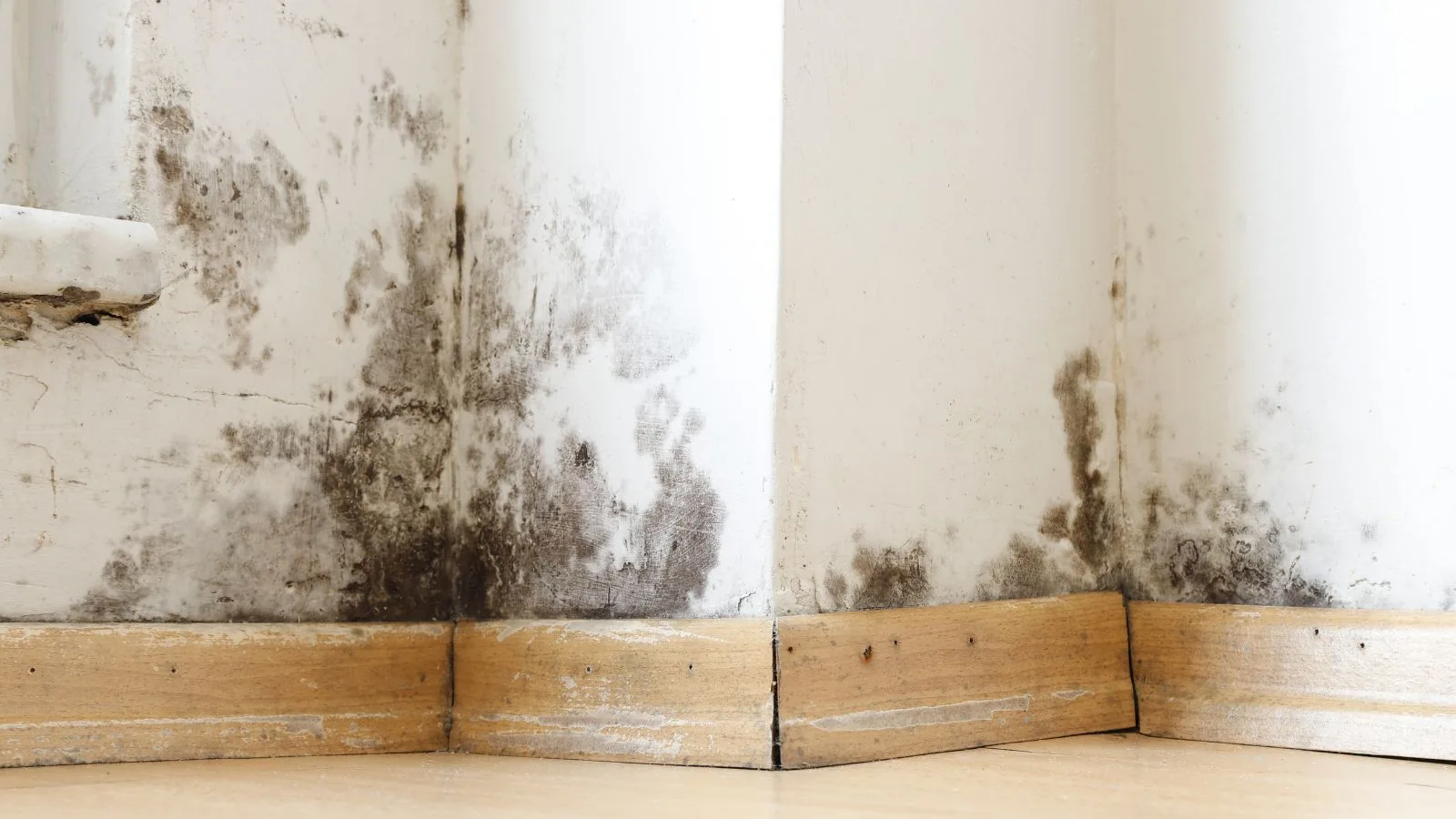
What the smell usually means
A musty or earthy odor commonly comes from microbial growth in damp material. After a leak, flood or period of high humidity, it can come from wet drywall, carpet pad, insulation or wood that never dried completely. The smell can linger long after the surface looks fine.
Deodorizers and air fresheners cover the odor without solving the cause. The EPA says moisture control is the key to mold control, and the same idea applies to smells.
Where musty smells hide
| Location | Likely cause |
|---|---|
| Basement or crawl space | Groundwater, humidity, damp stored items. |
| Behind baseboards and under carpet. | Past leak or flood that was not dried through. |
| Closet on an outside wall. | Roof, window or condensation moisture. |
| Near a bathroom or laundry. | Slow plumbing leak or poor ventilation. |
| HVAC vents and ducts | Condensation or a clogged drain pan. |
| Under a sink | Slow supply or drain leak. |
How to track it down
- Follow the smell room by room, and note where it is strongest.
- Check under sinks, around appliances and along exterior walls.
- Look for stains, warping, peeling paint and soft spots.
- Use a moisture meter if you have one, or call someone who does.
- Check humidity, since levels above about 60 percent encourage growth.
- Remove wet stored items and let the area dry with airflow and a dehumidifier.
Smells that point to something else
Not every odor is mold. A sulfur or rotten egg smell near a drain may be a dry trap or a sewer gas leak. A sweet or chemical smell may come from a refrigerant or a gas appliance. If you ever smell natural gas, leave the house and call the gas company or 911 from outside.
A musty smell tied to water is different. It tends to be strongest near damp materials, to change with the weather and to linger in closed rooms or lower levels.
Carpet, upholstery and stored items
Porous belongings hold odor long after surfaces dry. Carpet pad, upholstered furniture, mattresses and cardboard boxes that stayed wet are common sources. Items that were soaked for several days are often better replaced, while hard goods can usually be cleaned and dried.
If you are unsure what to keep, set the item outdoors in dry air and see whether the smell fades, or ask for guidance during an assessment.
How long a smell takes to fade
If you have dried and removed the source, a mild odor can fade over several days as the air exchanges and the materials finish drying. A smell that gets stronger instead of weaker, or comes back when the weather is humid, points to moisture still hidden somewhere.
Keep notes on when the smell is worst. If it spikes after rain, look at the roof, the gutters and the foundation. If it spikes when the heat or air conditioning runs, look at the ducts and drain pan.
Cleaning, air and humidity
Once the source is solved, ventilation and humidity control keep the smell from returning. Run a dehumidifier in damp spaces, run exhaust fans in baths and kitchens and keep furniture a little away from exterior walls so air can move behind it.
Air purifiers with filters can help with particles, but they do not fix the cause. Think of them as a supplement to drying, not a replacement.
When the smell stays
If the smell remains after you have dried and cleaned the obvious areas, the source may be inside a wall, below flooring or above a ceiling. Thermal imaging and moisture meters can find hidden wet areas without cutting blindly, and removing a small section for inspection is sometimes the only way to be sure.
Our page on structural drying and dehumidification explains how wet cavities are dried, and mold remediation covers what happens when growth is present.
Health and cautions
Odors can bother people for many reasons, and we do not make health claims. If anyone in the home has symptoms they connect to the smell, talk to a doctor. Avoid stirring up suspected growth by scrubbing or sweeping, and keep the area closed off until you know more.
If the smell followed sewage or flood water, treat the material as contaminated and call for help.
Odors after East Haven coastal flooding
Flood water from the Sound or the Farm River carries silt and contaminants into basements and crawl spaces, and the smell can persist if materials are not removed or dried. The National Weather Service has recorded flooding on Cosey Beach Avenue in December 2010, August 2011 and October 2018, and any home that took water in such an event should check low areas for lingering moisture.
The Connecticut Department of Public Health links homeowners to guidance on cleaning flooded homes. Sources: the National Weather Service New Haven impacts record and the Connecticut Department of Public Health.
Further reading on musty smell after water damage: Connecticut Department of Public Health, Town of East Haven, EPA guidance on mold and moisture. Industry practice for water work follows the ANSI/IICRC S500 standard and for mold work the S520 standard.
Questions homeowners ask
Why does my East Haven basement smell musty even when it looks dry?
Hidden moisture in concrete, wood or stored items can smell without showing. Check humidity and look behind boxes and along walls.
Can a dehumidifier remove the smell?
It can help by lowering humidity, but it will not remove the cause if damp material remains.
Is a musty smell always mold?
Not always, but it often points to microbial growth. A moisture check helps decide.
Can I use bleach or an odor bomb?
These cover or surface-treat the problem. Find and fix the moisture, and remove material that cannot be dried.
Do you serve homes outside East Haven?
Yes, including New Haven and Woodbridge.
Smell lingering after a leak or flood? Call the 24/7 line.
Call (833) 521-1033