
Why signs are easy to miss
Water damage usually starts out of sight, inside a wall, under a floor or above a ceiling. By the time it is visible, it has often been present for a while. The good news is that most water damage leaves clues, and you can look for them without special tools.
This guide sorts those clues by what you can see, smell, hear and measure. If you find several, treat it seriously.
What you can see
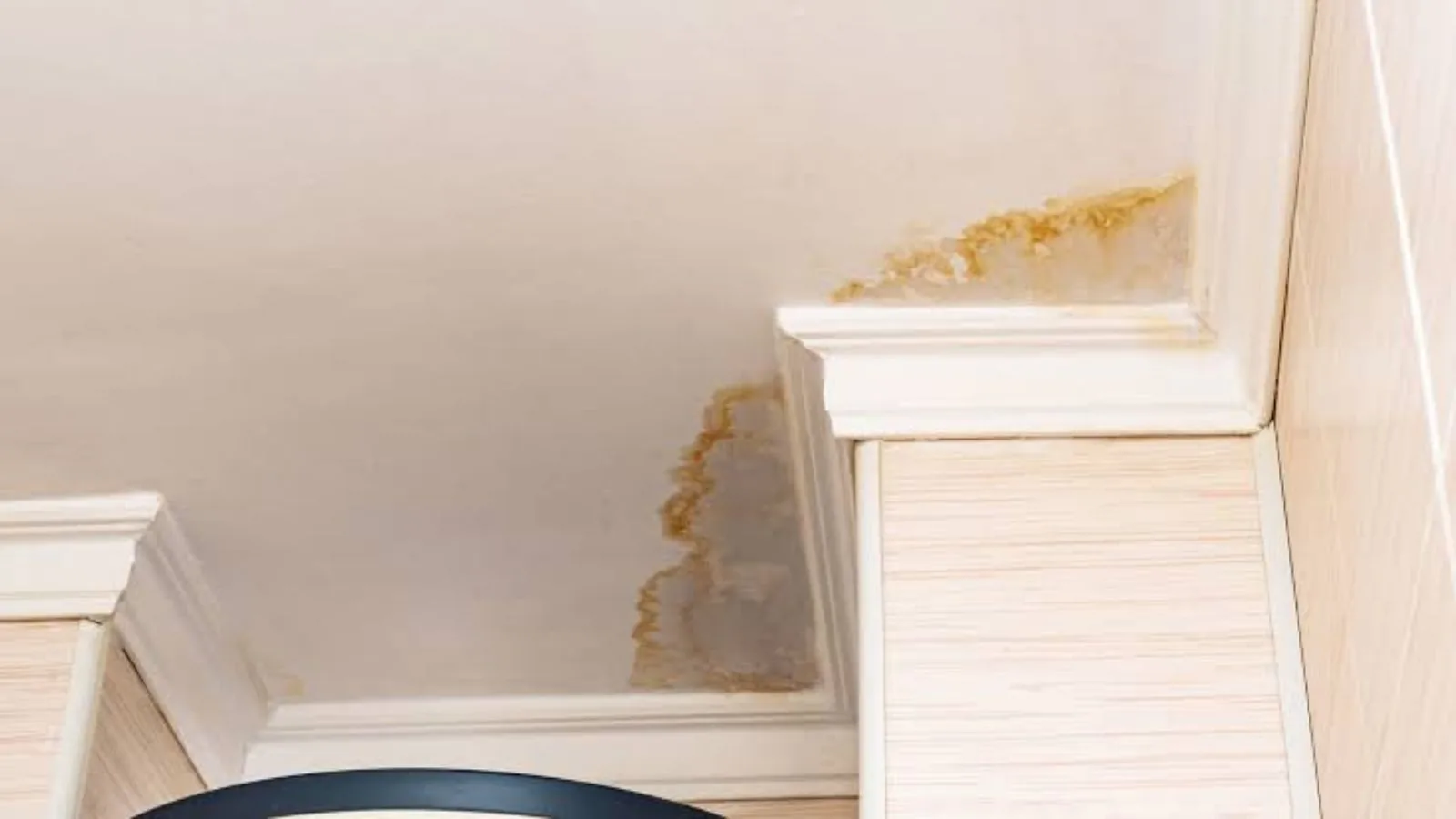
- Stains on ceilings and walls, usually tan, yellow or brown, often with a darker ring at the edge.
- Bubbling, peeling or cracked paint and wallpaper.
- Warped, cupped or buckled floors, and lifting vinyl or tile corners.
- Swollen baseboards, door frames and cabinet bases.
- Dark spots that look like mold, especially in corners and under sinks.
- Water marks that return after painting.
What you can smell and hear
- A musty or earthy smell that gets stronger in a closed room.
- The sound of running water when all fixtures are off.
- Dripping or hissing inside walls.
- A hollow sound when you tap a swollen wall or floor.
Why timing changes everything
The same leak causes very different amounts of damage depending on how long it runs. A supply line that is shut off within an hour may only wet a floor. One that runs for a week can soak framing, insulation and subfloor. That is why noticing early signs matters so much, and why a small stain is worth investigating.
Drywall paper, wood and insulation absorb water and hold it. Once a material has stayed wet for a day or two, drying it in place becomes harder and the chance of mold rises.
A seasonal checklist for East Haven homes
A few minutes each season catches most problems early.
- Spring: check the basement walls and floor for new dampness after the thaw and heavy rains.
- Summer: look for condensation on cold pipes and air conditioning drain lines.
- Fall: clear gutters and check the roof and flashing before storms arrive.
- Winter: watch for frozen pipes and ice dams, and check exterior walls for staining.
- Any time: look under sinks and behind appliances when you clean.
- After any storm: walk the lowest part of the house with a flashlight.
Rooms and places to check first
Start where water is used or enters the house. Kitchens, bathrooms, laundry areas, water heaters, basements, attics and the walls below roof valleys all deserve a look. Check under sinks, behind toilets and around the base of washing machines, since slow leaks there often run for months.
In older homes, look closely at the ceilings below second-floor bathrooms and at the basement walls where the foundation meets the floor. Efflorescence, a white powdery deposit on masonry, is a sign that water has been moving through the wall.
Where each sign tends to point
| Sign | Common source | First thing to check |
|---|---|---|
| Ceiling stain below a bathroom. | Supply line, drain or tub seal. | The fixture above and the access panel if present. |
| Cupped hardwood near a kitchen sink. | Slow leak or dishwasher line. | Cabinet base and floor edge. |
| Damp basement wall with white powder. | Groundwater or poor drainage | Gutters, grading and downspouts. |
| Musty smell in a closet on an outside wall. | Roof or window leak, condensation. | Roof flashing and window seals. |
| Rising water bill with no change in use. | Hidden leak or running toilet. | The meter test described above. |
None of these alone proves a problem, but any of them is worth a closer look.
New damage versus old damage
Knowing the difference tells you whether to hurry.
| Clue | Probably active | Probably old |
|---|---|---|
| Stain edge | Dark and damp, may be soft. | Dry, hard and crusty. |
| Paint | Bubbling and soft | Flaking and dry. |
| Smell | Musty and getting stronger | Stale or none. |
| Meter reading | Above the normal for that material. | Normal |
| Stain growth | Gets larger after rain or use of water. | Stays the same size. |
The simple checks you can do
A water meter test is one of the easiest ways to catch a hidden leak. Turn off every fixture and appliance, note the meter reading, wait an hour or two without using water, and read it again. If the number moves, water is flowing somewhere.
You can also press on suspicious surfaces. A wall that feels soft, or a floor that gives underfoot, usually means water has been working on it. Do not poke at suspected mold, since disturbing it can spread spores.
When to call a professional
If you find a stain that grows, a smell with no visible source, a bowed ceiling or any sign of sewage or flood water, call right away. Moisture meters and thermal imaging can find water behind surfaces without cutting, and the structural drying process explains how a wet area is dried and monitored.
Not every sign needs an emergency crew. A small, old stain with dry readings may only need repair. The point of an assessment is to sort the active from the old.
Checking after coastal flooding in East Haven
The National Weather Service record for the New Haven area lists coastal and river flooding in East Haven on several dates, including Cosey Beach Avenue in December 2010, August 2011 and October 2018. After any event that put water near your home, including tide-driven flooding that reaches the street, walk the lowest areas of the house and look for the signs above.
Flood water is treated as contaminated, so do not touch it or handle wet materials without protection. Source: the National Weather Service New Haven coastal flood impacts record.
Further reading on signs of water damage: National Weather Service New Haven and Long Island office, Connecticut Department of Public Health, Town of East Haven. Industry practice for water work follows the ANSI/IICRC S500 standard and for mold work the S520 standard.
Questions homeowners ask
Do coastal flood events in East Haven leave hidden damage even if my floor looks dry?
They can. Water that stood against a foundation or crawl space can wick into framing and insulation without a visible puddle. Use a meter or call for a reading if you had water on the property.
How do I tell mold from dirt?
Mold often looks fuzzy or spotty and smells musty. Dirt wipes off cleanly. If you are unsure, do not scrub it. Take a photo and ask for an assessment.
Is a ceiling stain always a leak?
Usually, though condensation can also cause stains. A stain that grows or feels damp indicates active moisture.
Can I find a hidden leak without tools?
Often. The meter test above and checking under sinks and around appliances catch many leaks.
Do you serve homes near New Haven too?
Yes, including New Haven and Woodbridge. The signs and process are the same.
Think moisture is hiding in a wall or floor? Call for a reading.
Call (833) 521-1033